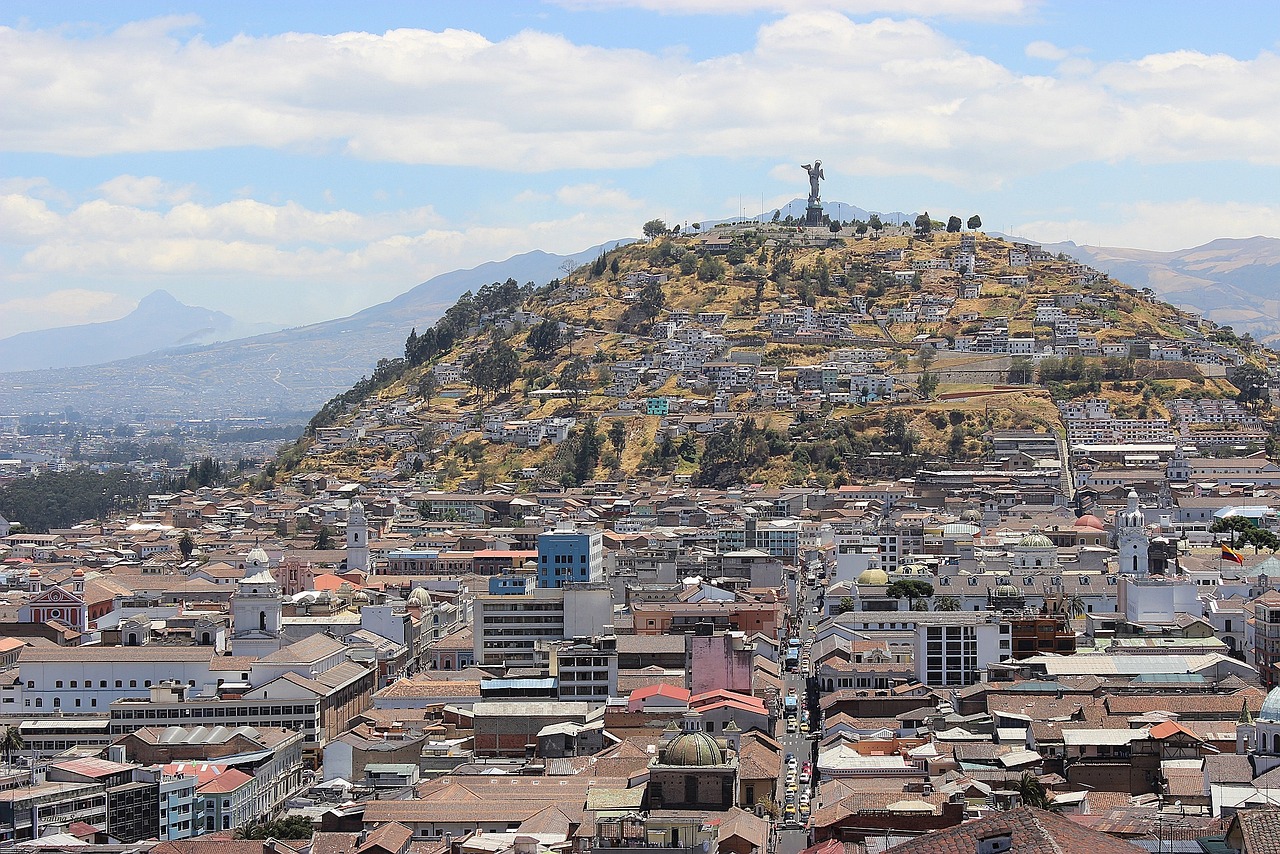
Quito
Ecuador
GOVERNMENTAL DESTINATION
General information
Quito, the capital of Ecuador, is located in the Andean highlands and serves as the political, economic, and cultural center of the country. Founded in the 16th century, Quito is one of the oldest and best-preserved capitals in South America, known for its rich history, colonial architecture, and dynamic culture. The city is home to the Ecuadorian government, numerous embassies, and international organizations, making it a key destination for governmental and institutional travel in the region. With its strategic location and historical significance, Quito is an important center for high-level diplomatic engagements, government operations, and international conferences.

Testimonials
Lenin Moreno, Former President of Ecuador: 'Quito is at the heart of Andean diplomacy, where important decisions shaping the region's future are made.' (Source: Speech at the Andean Community Presidential Summit 2018). Moussa Faki Mahamat, Chairperson of the African Union Commission: 'Quito continues to be an essential center for international unity and cultural exchange.' (Source: Statement during his visit to Ecuador in 2019). Joan Clos, Former Executive Director of UN-Habitat: 'Quito's role in fostering global cooperation on urban development is exemplary.' (Source: Address at the Habitat III Conference 2016).
Importance of the GITT sector
Quito plays a crucial role in Andean and Latin American diplomacy, serving as a central location for governmental activities and international relations. The city is a strategic venue for discussions on regional integration, environmental sustainability, and economic cooperation.
Diplomacy and institutions
Quito hosts over 50 embassies and consulates, and is home to regional offices of international organizations such as the United Nations and the Andean Community (CAN). These institutions underscore Quito's significance as a hub for regional diplomacy and international cooperation.

Rail and conections
Quito does not have a traditional rail network, but the city provides reliable internal transportation options, including taxis, buses, and the Quito Metro which is currently under development. These services ensure efficient and secure transportation for governmental delegations within the city.

Airports
Quito is served by Mariscal Sucre International Airport (UIO), located approximately 40 km from the city center. The airport handles both commercial and private flights, offering VIP services and enhanced security for governmental delegations.

Venues
Quito offers several venues for governmental events, including the **Centro de Convenciones Metropolitano de Quito, the Hotel Swissotel Quito, and the JW Marriott Quito. These venues are equipped with modern facilities and security measures necessary for hosting high-level meetings and conferences.
Economic, social and cultural impact of the sector on the destination
Governmental and institutional events in Quito contribute approximately 11% of the total tourism and events expenditure in the city. These events play a crucial role in supporting the local economy, fostering international cooperation, and positioning Quito as a key player in Andean and Latin American diplomacy.

Governmental events
Quito has hosted significant events such as the UN Conference on Housing and Sustainable Urban Development (Habitat III) in 2016 and the Andean Community Presidential Summit in 2018.

Sustenability and RSC
Quito is actively pursuing sustainability initiatives, including the preservation of its cultural heritage, development of green energy projects, and promotion of sustainable tourism. The city is also focused on reducing its carbon footprint through the promotion of public transportation and sustainable event practices.